
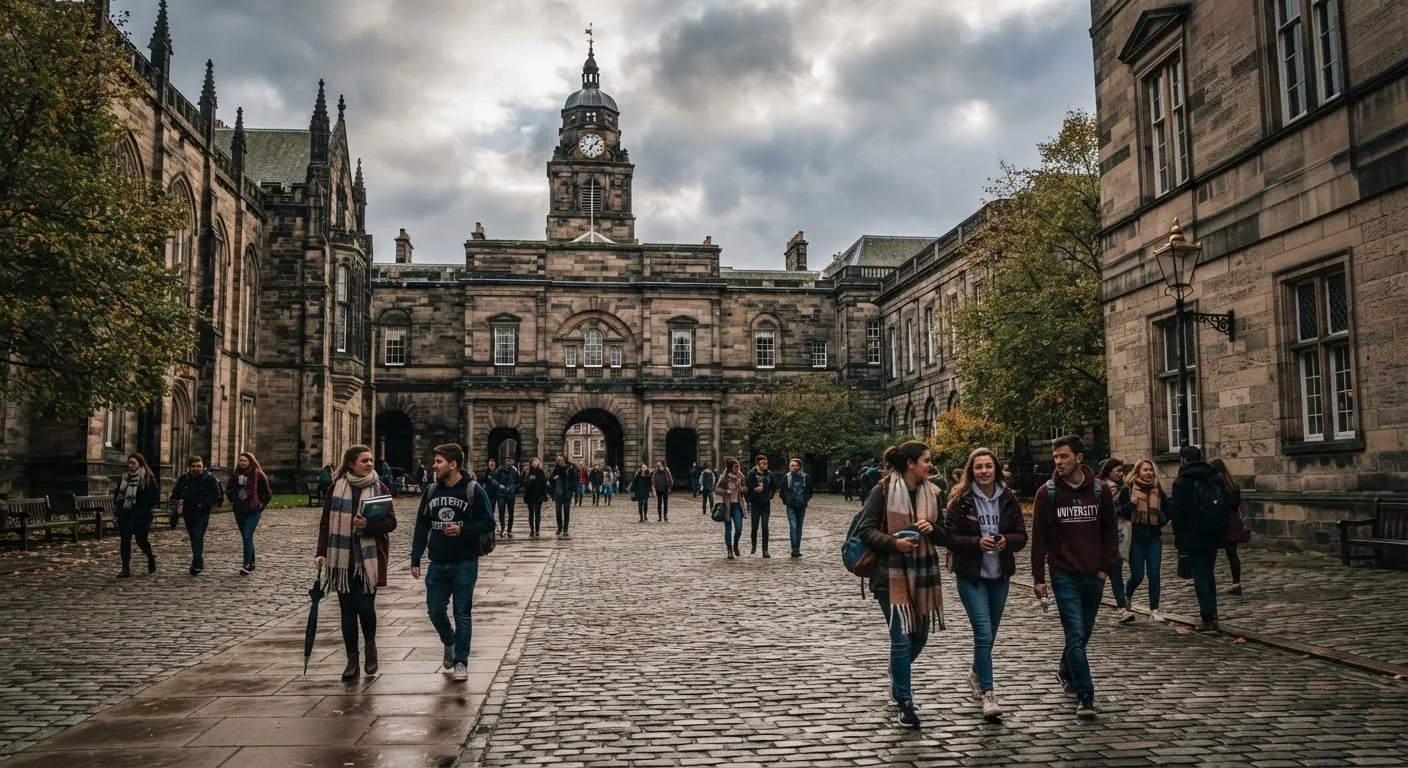
 Data Science & AI
MSc Data Science
University of Melbourne
- Location
- Melbourne, Australia
- Indicative tuition
- A$52,400 / year
placement for SGD 50, counselling to visa
India's second-largest study corridor offers world-ranked universities, wages that genuinely offset living costs, and two to four years of post-study work — for applicants who take the Genuine Student requirement seriously.
Rupee figures converted at August 2026 mid-market rates (A$1 ≈ ₹67) and rounded. Confirm live rates and official fees before budgeting.
Seven Australian universities sit in most world top-100 lists, and Indian students have made Australia their second-favourite destination on the strength of what surrounds the rankings: 48 hours a fortnight of permitted term-time work at some of the world's highest minimum wages, a subclass 485 post-study visa running two to four years, and established Indian communities in every major city. Direct flights and a friendly time difference keep home close.
Admissions read Indian qualifications cleanly: universities publish Class XII requirements by board — typically 65%–85% depending on institution and course — and master's entry works from Indian bachelor's degrees with standard IELTS bands. The two-intake calendar is a quiet advantage for Indian students: a July intake catches students straight off Class XII results or Indian graduation without the year-long wait a September-only system imposes, and February suits those who want more preparation time.
At August 2026 rates, tuition of A$25,000–A$55,000 converts to ₹17–37 lakh a year — Group of Eight universities at the top, strong technology universities well below them. The visa's financial-capacity rule requires showing around A$30,000 (about ₹20 lakh) for living costs, plus Overseas Student Health Cover for the visa length. A three-year bachelor's therefore books at roughly ₹1.1–1.7 crore, a two-year master's ₹68 lakh–₹1.1 crore, before any offsets.
The offsets are real, though. Casual wages of A$25–30 an hour mean a student working near the permitted cap can cover most living costs from earnings — a materially better ratio than the UK or Canada — and the 485 visa's two to four years of full work rights sit at the end. Indian education loans cover Australia readily, and university scholarships of 25%–50% off tuition (Monash's leadership awards, Griffith Remarkable and similar catalog entries) are decided on marks alone. The honest budget plans on sticker price and treats earnings as insurance.
Australia's Genuine Student (GS) assessment is where Indian applications succeed or fail, and volumes from India mean officers apply it rigorously — some universities also run their own pre-screening for regions with high refusal histories. The GS questions probe why this course, why Australia, and whether your finances and history support the plan. Answers are checked against your documents, not taken on faith.
What works is specificity and coherence: course units named and connected to your background, gaps in study explained plainly, funds that are seasoned and traceable to sponsors with documented income, and a post-study story that acknowledges the 485 period honestly rather than pretending you'll fly home at graduation. What fails is anything template-shaped. Our counsellors draft and stress-test GS statements with Indian students line by line — free, because a refusal costs a family far more than a counselling session ever would.
Data Science & AIUniversity of Melbourne
 Social Sciences
 Engineering
Monash University
EngineeringUniversity of Sydney
 Computer Science & IT
Monash University
 Media, Film & Arts
Monash University
 Australia
Australian Government Department of Education
Tuition fee offset, and at many universities a living stipend and health cover as well
AustraliaDeakin University
100% of the indicative tuition fee stated in the offer letter, worth over ₹6 million per award
AustraliaUniversity of Melbourne
Full fee offset, a living allowance of around A$39,500 a year, a relocation grant and overseas student health cover
Browsing more broadly? See every award in scholarships to study in australia.
Published requirements run from about 65% for good universities to 85%+ for the most competitive Group of Eight programmes, assessed on CBSE, ISC or state boards, usually with subject-specific marks for engineering and computing. Master's entry wants a solid Indian bachelor's — often 60%+ or first division for strong programmes. IELTS 6.5 overall is the standard band. Foundation and diploma pathways exist at nearly every university for students below direct-entry marks.
At August 2026 rates (A$1 ≈ ₹67): tuition of ₹17–37 lakh a year, plus a required living budget of about ₹20 lakh. A three-year bachelor's totals roughly ₹1.1–1.7 crore before offsets. Part-time work helps more than in any comparable destination — at A$25–30 an hour, near-cap term-time work can cover most living costs — but visa rules cap hours and officers expect your financing plan to stand without earnings. Plan on full price; earn as relief.
Strict, and stricter for applications that look mass-produced. Officers assess whether your course choice fits your history, whether funds are genuine and seasoned, and whether your stated plans hold together — against a background of high application volumes from India. Specific, documented, honest applications pass; template statements and unexplained lump-sum deposits are the two most common refusal triggers. Treat the GS statement as seriously as the university application itself.
July fits the Indian calendar best: Class XII results in May feed a July start with weeks to spare, and Indian graduates finishing in spring roll straight into master's programmes. February — Australia's main intake — offers the widest course choice and suits students who want time for IELTS, scholarship rounds and visa preparation after results. Both are full intakes with the same degrees; the right one depends on your results date and readiness, not quality.
A flat SGD 50, billed as two monthly instalments of SGD 25. That covers everything: counselling, university matching, application support and guidance right up to your offer. There are no hidden extras, no agent fees and no commission on your tuition, because our counselling is funded by our university partners, the SGD 50 only covers administration. Separately, you pay the university’s own tuition or semester fees directly to the university after you accept your offer.
Everything from start to finish: understanding your options, shortlisting the right programme, preparing your application and personal statement, submitting to the university, and guiding you through the offer, enrolment and visa paperwork, all with a dedicated counsellor.
Free · apply yourself
ApplyBoard, our application partner, lists schools across Australia that are not in our own catalogue — mostly pathway and teaching institutions. You can browse and apply to those yourself at no cost.
Browse ApplyBoard programmes ↗Answer a few questions and we will show you where you stand, then a Tutopiya counsellor takes it from there.
Step 1
⏱ About 90 seconds
SGD 50 in total, charged as 2 monthly instalments of SGD 25. University tuition is separate and paid directly to the university.
Find your university
About 90 seconds · a flat SGD 50