

Red Flags When Hiring a Home Tutor in Singapore
Quick answer: The biggest home tutor red flags in Singapore are refusing a trial lesson, demanding cash or a large sum upfront, vague answers about the syllabus, and no way to track lessons. Any one should make you pause; two or more, and you should walk away and find someone else.
Most home tutors in Singapore are genuine and hardworking — but the ones who aren’t can cost you money, time and a term of your child’s progress. Learning to spot home tutor red flags early lets you exit cheaply, before you’ve handed over cash or locked into a package. Here’s the checklist, roughly in order of how seriously to take each.
The serious red flags (walk away)
| Red flag | Why it matters |
|---|---|
| Refuses a trial lesson | Removes your only real chance to assess them before paying |
| Demands cash upfront / a large package | No protection if lessons are skipped, rushed or cut short |
| Can’t discuss the exact syllabus | Suggests they don’t actually know your child’s level or stream |
| Pressures you to sign quickly | Urgency is a sales tactic, not a sign of a good teacher |
| No verifiable identity or track record | Basic safety — you’re letting them into your home |
If you hit any of these, stop. A good tutor will meet every one of them without flinching.
The softer warning signs (proceed carefully)
These aren’t automatic deal-breakers, but stack up two or three and reconsider:
- Only speaks in slogans — “patient”, “experienced”, “results-guaranteed” — with no specifics about how they’d help your child.
- Guarantees a grade. No honest tutor can promise an A; learning depends on the child too.
- Vague on availability. A tutor who can’t commit to consistent days will cancel on you.
- No homework or marking. Practice that isn’t checked barely moves the needle.
- No progress updates offered. If they don’t mention how they’ll keep you informed, expect silence.
- Rate far below the market. Unusually cheap can signal inexperience — see our cost guide for realistic ranges.
- Reluctant to be tracked. A tutor who resists any record of lessons is telling you something.
The single test that catches most red flags
Notice how many red flags collapse the moment you insist on a trial before committing and a record of every lesson. Those two conditions alone filter out cash-grabbers, no-shows and pretenders — because none of them survive being watched once and tracked thereafter.
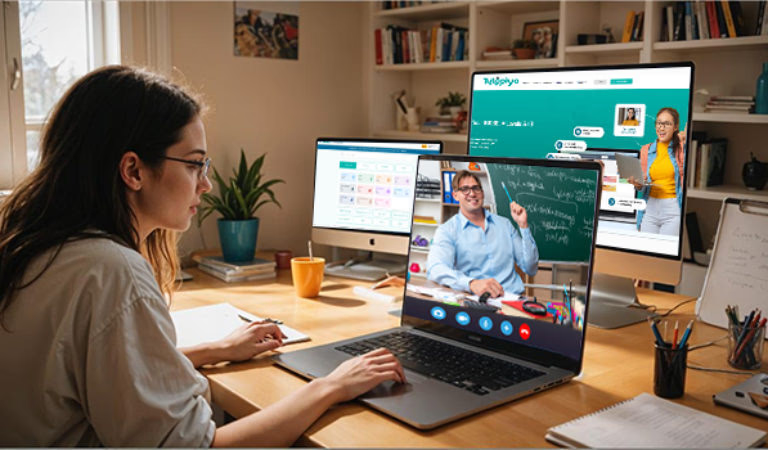
This is exactly how the Tutopiya hybrid model removes the risk: you meet a matched, Singapore-based tutor in a free online trial before any money changes hands, then move in-person. You pay by card (never cash), credits are deducted only per completed lesson, and you get a full report of every class held, missed or rescheduled. That accountability turns most of the red flags above into non-issues.
What a green flag looks like
For balance, here’s what a trustworthy tutor does:
- Offers a trial without being asked, and welcomes being watched.
- Talks specifics — the exact marking scheme, your child’s likely weak spots, a plan.
- Is happy to be tracked, with lessons recorded and progress reported.
- Charges fairly and is transparent about how and when you pay.
If most of these are present, you’re probably in safe hands. For the full vetting process, see how to vet a home tutor for safety and our list of questions to ask before hiring.
The bottom line
Home tutor red flags are easiest to act on early — before the cash and the commitment. Insist on a trial, insist on records, and pay only for lessons that happen. Do that, and the risky tutors filter themselves out, leaving the good ones who have nothing to hide.
Ready to hire without the risk? Start with a free online trial and assess a matched tutor before you pay anything.
Frequently asked questions
What are the biggest red flags when hiring a home tutor? +
The biggest red flags are refusing a trial lesson, demanding cash or a large sum upfront, vague answers about the syllabus, and no way to track lessons. Any one of these should make you pause; two or more, and you should walk away and find another tutor.
Is it a red flag if a tutor only accepts cash? +
It's a caution sign. Cash-only, paid upfront, with no record leaves you no protection if lessons are skipped or cut short. A safer arrangement is paying by card, only per completed lesson, with a written report of every class held or missed.
Should I worry if a tutor won't do a trial lesson? +
Yes. A tutor confident in their teaching will happily be watched once. Refusing a trial — or pushing you to sign a long package immediately — is one of the clearest red flags, because it removes your only real chance to assess them before paying.
How do I avoid a bad home tutor in Singapore? +
Screen against a red-flags checklist, insist on a trial before committing, and choose an arrangement with clear records and per-lesson payment. The goal is to make it easy to walk away cheaply if something feels off.
Where can I hire a home tutor without these risks? +
You can meet a matched, Singapore-based tutor in a free online trial before paying, then move in-person with card payment per completed lesson and a full lesson report — which removes most of the red flags below. View home tutors and book a free trial here.
Written by
Tutopiya Singapore Education Desk
Singapore home tuition · PSLE, O-Level & A-Level (MOE syllabus)
The Tutopiya Singapore Education Desk covers home tuition, the MOE syllabus and exam preparation for Singapore families — from PSLE through the GCE O-Level and A-Level.
Related Articles
A-Level Project Work (PW) Home Tuition in Singapore
Project Work (PW) tuition in Singapore helps JC students structure research, the written report and the oral presentation - a tutor guides the work without doing it for them.

Assessment Books vs Home Tuition in Singapore
Assessment books vs tuition in Singapore - when the ten-year-series and self-study is enough, when a home tutor is worth it, and how to combine both effectively.

DSA Preparation with Home Tuition in Singapore
How Direct School Admission (DSA-Sec and DSA-JC) works in Singapore, what tuition can and cannot do, and how a home tutor supports the academic and portfolio side.