

PSLE Preparation with Home Tuition: A Parent's Timeline
Quick answer: Effective PSLE preparation home tuition is less about starting early and more about timing the work correctly — foundations in P5, technique and timed past-paper drilling in P6. The smartest way to begin is a free online trial to meet a matched Singapore-based tutor and see them teach your child before any in-person lessons or payment.
The PSLE is the first high-stakes exam in a Singapore child’s life, and the Achievement Level (AL) score shapes secondary school options. Good PSLE preparation home tuition doesn’t cram — it follows a timeline, targeting the right skill at the right moment. Below is a practical parent’s timeline from P4 to the exam, what a home tutor should focus on at each stage, and how to hire one without cold-calling agencies or paying cash before you’ve met them.
A PSLE preparation timeline (P4 to exam)
Different years call for different work. Trying to do everything at once — or drilling past papers in P4 — wastes the runway. This is roughly how preparation should be sequenced.
| Stage | What preparation should target |
|---|---|
| P4 | Optional early start if foundations are shaky, especially Maths. Fix gaps before the syllabus deepens. |
| P5 (first half) | Build core technique — the model (bar) method, structured working, precise Science answering. |
| P5 (second half) | Deepen problem-solving; introduce harder open-ended and application questions. |
| P6 (first half) | Consolidate all four subjects; identify the weakest paper and prioritise it. |
| P6 (final months) | Timed past-paper drilling under exam conditions, plus review of every dropped mark. |
The pattern is clear: content and technique first, drilling last. Past papers are a diagnostic and a rehearsal, not a teaching tool — drilling before the underlying method is secure only rehearses mistakes.
What home tuition targets at PSLE
A 1-to-1 home tutor’s biggest advantage is diagnosis. Rather than re-teaching every topic, a good tutor watches your child work and pinpoints where AL bands are lost:
- Maths: careless working, skipped steps, and Paper 2 open-ended problems where the model method should be shown clearly.
- Science: imprecise MOE-style answering and applying concepts to unseen scenarios in Booklet B.
- English: comprehension (visual text and open-ended), Situational and Continuous Writing, and oral.
- Mother Tongue: comprehension, composition, oral and consistent vocabulary work.
Technique versus content
By P6, most pupils know the content — they lose marks on how they present it. This is where 1-to-1 preparation earns its keep: a tutor can watch your child solve a problem in real time and correct the habit immediately, something a crowded class simply cannot do. For a subject-specific view, the PSLE home tuition hub breaks down each paper in more detail.
Past-paper drilling done right
In the final months, timed past papers under exam conditions build stamina and pacing. But the value is in the review: going through every dropped mark so the pupil learns the pattern of their own errors. Ten papers reviewed carefully beats thirty rushed and forgotten.
Hiring a PSLE tutor the smart way
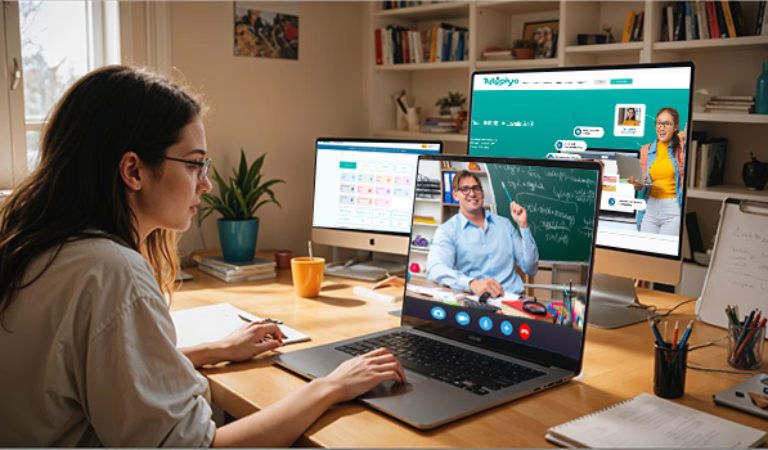
The counter-intuitive but sensible move is to meet the tutor online first, before anyone comes to your home:
- Book a free online trial — no payment, no commitment.
- Watch the tutor teach your child and gauge the rapport.
- Confirm the tutor you like, then enrol in a monthly plan.
- Lessons move in-person to your home.
This is exactly how the Tutopiya hybrid home tuition model works — you vet a Singapore-based tutor with zero risk before committing.
No cash, and a full record of every lesson
Traditional PSLE tuition means monthly cash or bank transfers and no paper trail of what was actually taught. Tutopiya replaces that with:
- Monthly card payments — no ATM runs, no cash envelopes.
- Credits deducted only per completed lesson — you pay for classes that actually happened.
- A full report of every lesson held, missed, rescheduled or cancelled.
In P6 especially, where every week counts, that accountability keeps the timeline on track.
The bottom line
Strong PSLE preparation is timed, targeted and matched to the goal — foundations in P5, technique consolidation early in P6, and timed past-paper drilling with careful review in the final stretch. Before committing to anyone, try a free online trial so you can see the tutor teach your child. For rates, see the home tuition cost guide, or read the complete guide to home tuition in Singapore for the wider picture.
Frequently asked questions
When should PSLE preparation with home tuition begin? +
Most families begin serious PSLE preparation in P5, when the MOE syllabus deepens and AL scores start to matter. P5 gives a full year to fix foundations before P6 narrows to technique and timing. A pupil with shaky Maths or Science may benefit from starting in P4 to prevent gaps from compounding.
What should a PSLE home tutor target first? +
A good tutor starts by diagnosing where marks are actually lost — usually careless working in Maths Paper 2 or imprecise Science answering — rather than re-teaching everything. Preparation then focuses on that weak paper, layering in past-paper drilling and timing once the underlying technique is secure.
Is content or technique more important for PSLE prep? +
By P6, most pupils know the content; they lose AL bands on presentation — how they show working, structure answers and manage time. Technique is where a 1-to-1 tutor adds the most, because they can watch your child solve a problem live and correct the habit on the spot, which a group class cannot do.
How much past-paper drilling does PSLE preparation need? +
Past papers matter most in the final months of P6, once foundations are secure — drilling too early just rehearses mistakes. The aim is timed, exam-condition practice followed by careful review of every dropped mark, so the pupil learns the pattern of their errors rather than simply doing more papers.
How do I start PSLE preparation without paying upfront? +
Start with a free online trial to meet a matched Singapore-based tutor and see them teach your child before you commit. If it's a good fit, you enrol in a monthly plan and lessons move in-person to your home. View PSLE home tutors and book a free trial here.
Written by
Tutopiya Singapore Education Desk
Singapore home tuition · PSLE, O-Level & A-Level (MOE syllabus)
The Tutopiya Singapore Education Desk covers home tuition, the MOE syllabus and exam preparation for Singapore families — from PSLE through the GCE O-Level and A-Level.
Related Articles
A-Level Project Work (PW) Home Tuition in Singapore
Project Work (PW) tuition in Singapore helps JC students structure research, the written report and the oral presentation - a tutor guides the work without doing it for them.

Assessment Books vs Home Tuition in Singapore
Assessment books vs tuition in Singapore - when the ten-year-series and self-study is enough, when a home tutor is worth it, and how to combine both effectively.

DSA Preparation with Home Tuition in Singapore
How Direct School Admission (DSA-Sec and DSA-JC) works in Singapore, what tuition can and cannot do, and how a home tutor supports the academic and portfolio side.