

Is Tuition Working? Signs to Look For
Quick answer: The clearest is tuition working signs are not grades at all, at least not at first. Watch for a child who starts attempting homework instead of dodging it, asks better questions, explains concepts back to you, and simply seems less anxious about the subject. Attitude and confidence shift weeks before marks move, so those changes are your earliest and most reliable evidence that home tuition is doing its job.
Every parent paying for home tuition eventually asks the same quiet question: is this actually helping, or am I just spending money and hoping? It is a fair question, and the answer deserves better than a glance at the latest test score. Real progress has a shape, and once you know what to look for, you can tell within a few weeks whether things are on track.
The signs tuition is working (in the order they appear)
Progress arrives in a predictable sequence. Grades come last, which is exactly why so many parents panic too early.
1. Attitude changes first
Before any number moves, behaviour does. Your child stops treating the subject as a threat. They sit down to homework with less nagging, groan a little less at revision, and occasionally mention the tutor or a topic without being asked. This is the very first green light, and it is easy to miss because it does not show up on a report card.
2. Engagement and effort rise
Next, effort. Your child attempts questions they would previously have skipped, shows working instead of leaving blanks, and is willing to be wrong. A child who is trying is a child who is learning, even if the marks have not caught up yet.
3. Understanding you can hear
A powerful test: ask your child to teach you something from the lesson. If they can explain why a method works, not just repeat it, the understanding is real. Parroting is fragile; explaining is solid. This is often the moment you know a foundation has actually been rebuilt.
4. Homework and class quality improve
Teachers notice before exams do. Fewer careless errors, more complete answers, better questions in class - these are all evidence that lessons are landing. If your child’s school teacher remarks on a change, take it seriously.
5. Grades follow
Finally, the number. Grade movement usually lags the other signs by a term or an assessment cycle, especially when a tutor has spent early lessons closing foundational gaps rather than chasing quick marks. For more on why weak students need that foundation work first, see our guide on home tuition for weak students in Singapore.
A simple progress checklist
Use this after about four to six weeks. The more you can tick, the more confident you can be.
| Sign | What you are looking for |
|---|---|
| Willingness | Attempts homework with less resistance |
| Questions | Asks sharper, more specific questions |
| Explanation | Can teach a concept back to you |
| Effort | Shows working instead of leaving blanks |
| Confidence | Less anxious or defeated about the subject |
| Class quality | Fewer careless errors, better answers |
| Record | Tutor can show what was taught each lesson |
If you are ticking most of these, tuition is working, even if the next test is not an A yet. Trust the trend.
What is NOT a reliable sign
Some things feel like evidence but are not. A single good test can be luck or an easy paper; a single bad one can be a hard topic or a rough day. Do not swing your whole judgement on one result. Equally, do not mistake your child simply liking the tutor for progress - rapport matters, but a fun lesson with no learning is a warning, not a win.
And beware the opposite trap: expecting a dramatic jump in a fortnight. Honest tuition does not work that way, particularly when foundations need rebuilding first. Progress for most children is steady rather than sudden.
How to make progress visible instead of guessing
The biggest reason parents cannot tell whether tuition is working is that traditional home tuition leaves no trail. A lesson happens, the tutor leaves, and you are left to infer everything from your child’s mood.
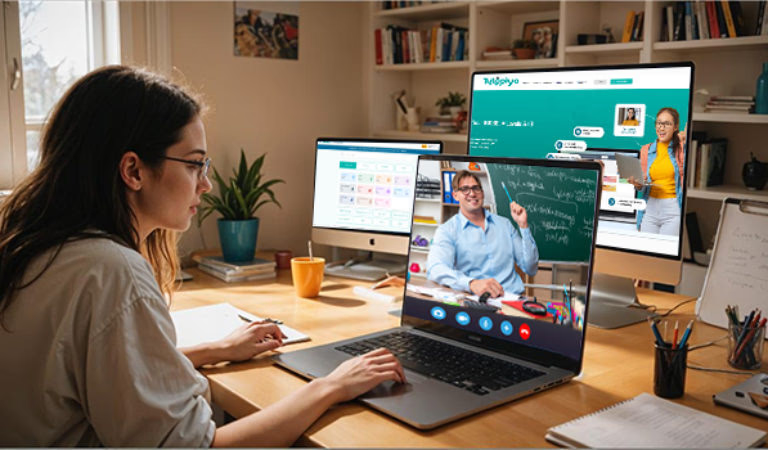
This is exactly what the Tutopiya hybrid model is built to fix. You start with a free online trial to meet and assess a matched, Singapore-based tutor, then move to in-person home lessons once it fits. You pay by card on a monthly plan with no cash, credits are deducted only for lessons actually completed, and every class comes with a full report - so you can literally see what was taught, how your child did, and what is next. That turns “I think it is helping” into evidence you can read.
When flat progress means it is time to review
Give tuition a full term before drawing hard conclusions. But if, after that term, there is genuinely no shift - no more effort, no more confidence, no clearer understanding, and a tutor who cannot tell you where your child started, where they are, and what comes next - then it is fair to review or switch. A good tutor always has that answer. Vagueness on all three fronts is the clearest sign something needs to change.
For help choosing a replacement well, see how to find a good home tutor in Singapore, and for the bigger picture, the complete home tuition guide.
The bottom line
Is tuition working? Look past the next test. The real signs are a child who tries more, avoids less, asks better questions, and can explain what they have learned. Those shifts come first; grades follow. Give it a term, track it against a simple checklist, and insist on a record you can actually see - so you are judging on evidence, not hope.
Want to see the progress instead of guessing at it? Start with a free online trial and meet a matched Singapore-based tutor before you commit anything.
Frequently asked questions
What are the earliest signs tuition is working? +
The earliest signs are rarely grades. Look for changed behaviour first: your child starts attempting homework instead of avoiding it, asks sharper questions, and can explain a concept back to you. Attitude usually shifts weeks before marks do, so treat renewed willingness to try as the first real evidence tuition is working.
How long before I should see results from home tuition? +
Give it about one term. You should see engagement and confidence within three to four weeks, and measurable grade movement over a term or across the next one or two assessments. Foundational gaps take longer to close than exam-technique polishing, so judge by the trend, not a single test result.
What if my child's grades haven't improved yet? +
Flat grades early on are not automatically a red flag. Ask whether the tutor is rebuilding foundations first, whether your child is more confident, and whether homework quality is rising. If there is zero change in attitude, effort or understanding after a term, that is the real warning sign - not one disappointing test.
How do I know if I should change tutors? +
Change tutors if, after a full term, there is no shift in engagement, no clear plan from the tutor, and no lesson-by-lesson record of what is being taught. A good tutor can always tell you where your child was, where they are now, and what is next. Vagueness on all three is your cue.
How can I track whether home tuition is actually working? +
The clearest way is full lesson reports so you can see progress rather than guess at it. Start with a free online trial to meet a matched Singapore-based tutor, then move to in-person lessons with a report after every class. View home tutors and book a free trial here.
Written by
Tutopiya Singapore Education Desk
Singapore home tuition - PSLE, O-Level & A-Level (MOE syllabus)
The Tutopiya Singapore Education Desk covers home tuition, the MOE syllabus and exam preparation for Singapore families - from PSLE through the GCE O-Level and A-Level.
Related Articles
A-Level Project Work (PW) Home Tuition in Singapore
Project Work (PW) tuition in Singapore helps JC students structure research, the written report and the oral presentation - a tutor guides the work without doing it for them.

Assessment Books vs Home Tuition in Singapore
Assessment books vs tuition in Singapore - when the ten-year-series and self-study is enough, when a home tutor is worth it, and how to combine both effectively.

DSA Preparation with Home Tuition in Singapore
How Direct School Admission (DSA-Sec and DSA-JC) works in Singapore, what tuition can and cannot do, and how a home tutor supports the academic and portfolio side.