
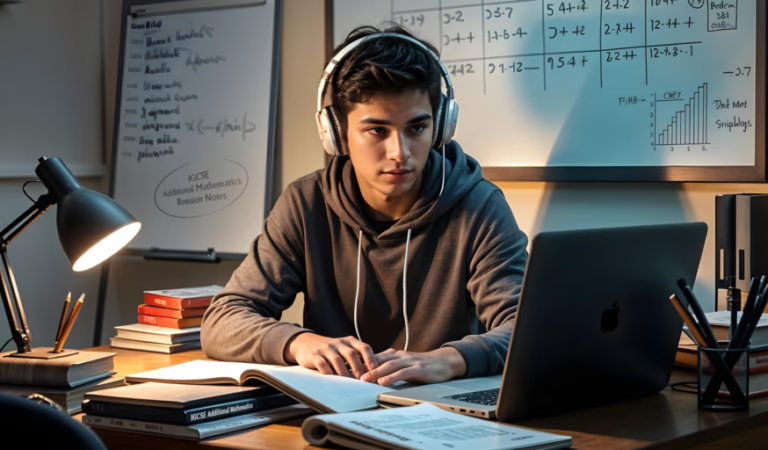
Is Home Tuition Worth It in Singapore?
Quick answer: Home tuition is worth it in Singapore when it’s targeted — a specific weak subject, an exam year, or a child who thrives with undivided 1-to-1 attention. It’s less worth it as a blanket “everyone gets tuition” default, or when lessons aren’t backed by independent practice. The value isn’t in buying more hours; it’s in buying the right hours for the right reason.
Tuition is close to a national default in Singapore, so the real question isn’t whether other families do it — it’s whether your child will actually benefit. Here’s an honest framework, without the sales pitch, to help you decide.
When home tuition is worth it
Home tuition tends to pay off clearly in these situations:
- A specific weak subject. If a child is strong overall but stuck in, say, A-Maths or Chemistry, targeted 1-to-1 help closes a real gap fast.
- An exam year. P6 (PSLE), Sec 4/5 (O-Level) and JC2 (A-Level) are high-stakes years where exam technique and marking-scheme know-how genuinely move grades.
- A child who needs undivided attention. Quieter students, or those who won’t ask questions in a class of 40, often bloom with a tutor focused solely on them.
- A confidence or foundation gap. When a child has fallen behind and lost confidence, patient 1-to-1 rebuilding is hard to replicate in a group.
When home tuition is not worth it
Just as important to be honest about:
- “Topping up” a child who’s already coping. If a child is doing fine, extra hours often add stress and cost with little upside.
- No follow-up practice. Tuition without independent revision is like physiotherapy without the exercises — the hour helps, but nothing sticks.
- A poor tutor fit. A brilliant tutor your child doesn’t connect with is worse value than a good tutor they trust.
- Buying hours to relieve parent anxiety. Paying for reassurance rather than a defined goal is the most common way money gets wasted.
The honest cost-benefit picture
| Factor | Points toward worth it | Points against |
|---|---|---|
| Subject | One clear weak subject | Vague “general help” |
| Timing | Exam year (P6, Sec 4/5, JC2) | No specific deadline |
| Child’s learning style | Needs 1-to-1 attention | Self-motivated, coping in class |
| Follow-through | Does the homework | Won’t practise between lessons |
| Tutor fit | Trusts and engages with tutor | Poor rapport |
If most of your answers land in the left column, home tuition is very likely worth it. If they land on the right, your money may be better spent elsewhere — or on fixing the follow-through first.
How to make sure the money is well spent
The difference between home tuition that’s “worth it” and money down the drain usually comes down to accountability and evidence:
- Set one clear goal per subject. “Move Science from a B to an A by prelims” beats “help with Science.”
- Match the tutor’s calibre to the goal. An ex-MOE tutor for exam technique; an experienced full-time tutor for building foundations. (See the 2026 cost guide for what each tier costs.)
- Insist on a record. Track what was taught, homework set and marks over time — otherwise you’re guessing.
- Try before you commit. A trial lesson tells you more about fit than any profile.
This is exactly where the model matters as much as the tutor. On the Tutopiya hybrid home tuition platform, you start with a free online trial to see the tutor teach before paying, then move to in-person home lessons. You pay by card on a monthly plan, credits are deducted only per completed lesson, and every lesson comes with a full report — so “is this working?” becomes a question you answer with evidence, not anxiety.
The bottom line
Home tuition in Singapore is worth it when it’s targeted at a real gap, timed around a genuine need, matched to a tutor your child engages with, and backed by follow-up practice. It’s not worth it as a reflex or a comfort blanket. Decide with a clear goal, demand a record of progress, and try before you commit — and you’ll know within a term whether the spend is paying off.
For related reading, see are home tutors worth it, signs your child needs a tutor, and the complete home tuition guide.
Want to test the waters risk-free? Start with a free online trial and see how a matched Singapore-based tutor works with your child.
Frequently asked questions
Is home tuition worth it in Singapore? +
For many families, yes — 1-to-1 home tuition is worth it when a child has a specific weak subject, an upcoming exam year, or learns better with undivided attention. It's less worth it as a default for a child who is coping well or who won't do the follow-up work. The value comes from targeted, consistent help, not just more hours.
When is home tuition NOT worth it? +
Home tuition rarely pays off if the child is already coping and just "topping up" for reassurance, if lessons aren't followed by independent practice, or if the tutor is a poor fit. Paying for hours without a clear goal is the most common way families waste money. Match the tutor to a specific gap, or reconsider.
Is home tuition worth it over a tuition centre? +
It depends on the child. A quieter or struggling child often gains more from undivided 1-to-1 attention at home, while a self-motivated child may do fine in a group centre at lower cost. Home tuition usually costs more per hour but can need fewer hours to reach the same result.
How do I know if home tuition is actually working? +
Look for evidence, not vibes — a record of what was taught each lesson, homework completed, and marks trending up over a term. On Tutopiya every completed lesson comes with a full report, so you can see progress instead of guessing whether the money is well spent.
How can I try home tuition without wasting money? +
Start with a free online trial so you can see the tutor teach your child before paying anything, then move in-person only if it's a clear fit. View home tutors and book a free trial here.
Written by
Tutopiya Singapore Education Desk
Singapore home tuition · PSLE, O-Level & A-Level (MOE syllabus)
The Tutopiya Singapore Education Desk covers home tuition, the MOE syllabus and exam preparation for Singapore families — from PSLE through the GCE O-Level and A-Level.
Related Articles
A-Level Project Work (PW) Home Tuition in Singapore
Project Work (PW) tuition in Singapore helps JC students structure research, the written report and the oral presentation - a tutor guides the work without doing it for them.

Assessment Books vs Home Tuition in Singapore
Assessment books vs tuition in Singapore - when the ten-year-series and self-study is enough, when a home tutor is worth it, and how to combine both effectively.

DSA Preparation with Home Tuition in Singapore
How Direct School Admission (DSA-Sec and DSA-JC) works in Singapore, what tuition can and cannot do, and how a home tutor supports the academic and portfolio side.