

Active Recall for IGCSE: Why It Works and How to Do It
Active recall for IGCSE is widely searched because evidence shows that retrieving information (testing yourself) is more effective than re-reading notes. Active recall means bringing information to mind instead of just looking at it – and it’s one of the best ways to make revision stick for exam day.
What Is Active Recall?
- Recall = Try to remember the answer before looking at your notes or the solution.
- Active = You are doing something (writing, saying, choosing) rather than passively reading.
- Examples: Flashcards (guess the back before flipping), practice questions (attempt before checking), “brain dump” (write everything you know about a topic then check), past papers under timed conditions.
The effort of retrieving strengthens memory more than simply re-reading.
How to Use Active Recall for IGCSE
- After each topic – Close the book and write or say the main points, then check.
- Flashcards – Try to answer before turning the card; put difficult cards in a “review again” pile.
- Past papers and questions – Do them under exam conditions, then mark; focus revision on what you got wrong.
- Explain to someone (or yourself) – If you can explain a concept without looking, you’ve recalled it.
Combine active recall with spaced repetition (review at intervals) for long-term retention.
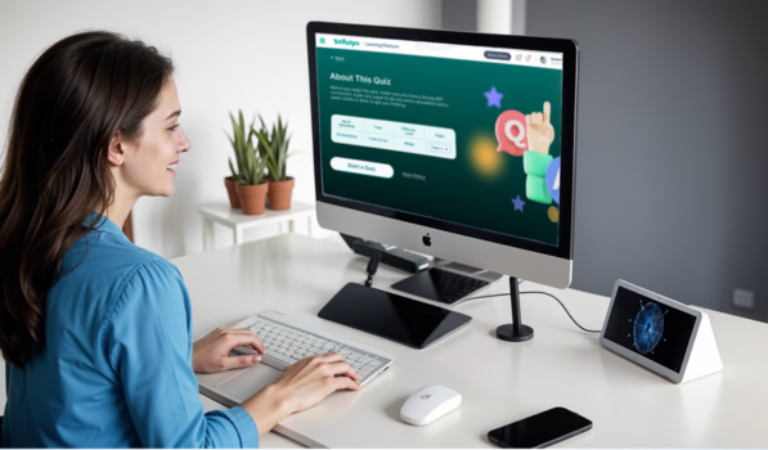
Tutopiya’s learning portal and tutors give you plenty of questions and past papers to practise active recall and target weak areas.
How to Do Active Recall in Your Revision (Practical Steps)
After each topic: Close the book and write or say the main points, then check. Flashcards: Try to answer before turning the card. Past papers: Do them under exam conditions, then mark; focus revision on what you got wrong. Explain to someone: If you can explain without looking, you have recalled it. Combine with spaced repetition: Review at intervals. The effort of retrieving strengthens memory more than re-reading.
Book a free trial or explore Tutopiya’s learning portal for structured practice and feedback.
Ready to Excel in Your Studies?
Get personalised help from Tutopiya's expert tutors. Whether it's IGCSE, IB, A-Levels, or any other curriculum — we match you with the perfect tutor and your first session is free.
Book Your Free TrialWritten by
Tutopiya Team
Educational Expert
Related Articles
Best IGCSE Tuition Options in Al Ain: A Parent's Guide
How Al Ain parents can compare IGCSE tuition: online one-to-one tutors, tuition centres, home tutors and marketplaces. Cambridge vs Edexcel, exam series, what comes after IGCSE, and questions to ask.

Best IGCSE Tuition Options in Dammam: A Parent's Guide
How Dammam parents can compare IGCSE tuition: online one-to-one tutors, tuition centres, home tutors and marketplaces. Cambridge vs Edexcel, exam series, what comes after IGCSE, and questions to ask.

Best IGCSE Tuition Options in Gaborone: A Parent's Guide
How Gaborone parents can compare IGCSE tuition: online one-to-one tutors, tuition centres, home tutors and marketplaces. Cambridge vs Edexcel, exam series, what comes after IGCSE, and questions to ask.