

Setting Up a Study Space at Home for Tuition
Quick answer: A good study space at home in Singapore does not need to be big or fancy - it needs to be quiet, well-lit, clutter-free, and consistently used. A dining table or a bedroom corner works perfectly well in an HDB flat. The goal is simple: a spot your child associates with focus, where the tutor can sit alongside, and where phones, TV and siblings are not competing for attention during the lesson.
You can hire an excellent tutor and still lose half the lesson to a blaring TV, a buzzing phone, or a cluttered table your child cannot think at. The environment does quiet, unglamorous work: it lowers distraction, signals that it is time to focus, and lets both child and tutor get straight into the material. Here is how to set one up that actually helps, whatever the size of your home.
Why the study space matters more than parents think
Children take cues from their surroundings. A bed says sleep; a sofa in front of the TV says relax. A dedicated study spot, used consistently, trains the brain that this is where focused work happens - and that association makes settling into a lesson faster every week. For home tuition specifically, it also gives the tutor a proper base to teach from rather than perching awkwardly with a laptop on their knees.
You do not need a study room. In most Singapore homes the dining table or a corner of the bedroom is plenty. What matters is not the size but the conditions.
The core ingredients of a good study space
Get these five things right and the rest is detail.
1. Quiet during the lesson
This is the single biggest factor. Switch off the TV, keep siblings in another room, and let the household know the lesson is on. If your flat is busy, the quietest corner at the quietest time beats a bigger space at a chaotic one.
2. Good lighting
Poor light tires the eyes and drains focus. A desk lamp plus natural daylight where possible keeps your child alert. Avoid screens as the only light source in a dim room.
3. A clear, dedicated surface
A desk or table cleared of everything except the current subject’s materials. Clutter is a silent distraction and adds mental load. One subject’s notes at a time; store the rest out of sight.
4. A supportive chair and room for two
Your child needs a chair that supports good posture for an hour or two, and there must be space for the tutor to sit beside them - not across a barrier. Side-by-side seating makes it far easier for the tutor to guide, point and mark work together.
5. Phones and unrelated screens away
The phone is the great focus-killer. Put it out of sight - not face-down on the table, but genuinely away - for the duration of the lesson. Your child will resist; hold the line.
A quick setup checklist
Run through this before your child’s next lesson. Tick what is true.
| Item | Ready? |
|---|---|
| Quiet spot with TV off and siblings elsewhere | |
| Good lighting - lamp plus daylight where possible | |
| Clear desk with only the current subject out | |
| Supportive chair and space for the tutor to sit alongside | |
| Phone away and out of sight for the whole lesson | |
| Materials ready - notes, textbook, stationery, water | |
| Same spot each week so it becomes the study habit |
If most boxes are ticked, your child will settle and focus far faster - and your tuition hours will do more.
Making it work in an HDB flat
Space is tight in many Singapore homes, and that is completely fine. A few practical moves help:
- Borrow the dining table at a set time and clear it fully before the lesson.
- Use a foldable divider or bookshelf to carve out a quiet corner in a shared room.
- Time lessons for the calmest window - after younger siblings are settled, or before the evening rush.
- Keep a caddy of that child’s materials so the space converts to a study spot in seconds and back afterwards.
Consistency beats square footage every time. The same modest corner, used the same way each week, outperforms a grand desk your child only uses occasionally.
The study space matters for online lessons too
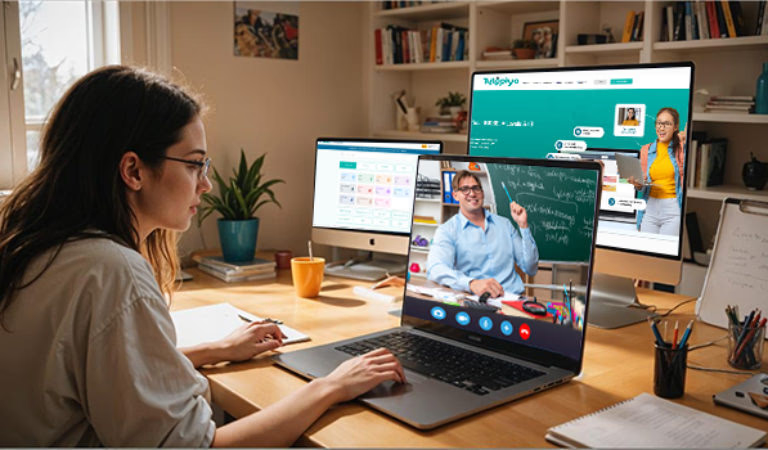
A quiet, well-lit spot is not only for in-person tutors. If you are starting with a free online trial to meet a tutor before committing - which is the sensible, low-risk way to begin - the same conditions apply: a stable device, headphones, closed browser tabs, and a calm background so your child engages properly.
This is how the Tutopiya hybrid model works: you meet and assess a matched, Singapore-based tutor in a free online trial first, then move to in-person home lessons at that same study spot once it fits. You pay by card on a monthly plan with no cash, credits are deducted only for completed lessons, and every class comes with a full report so you can see how your child is progressing in the space you have set up.
The bottom line
A good study space at home is quiet, bright, clutter-free, and used consistently - and in Singapore that is entirely achievable at a dining table or a bedroom corner. Get the conditions right, keep phones away, and give the tutor room to sit alongside your child, and you will get noticeably more out of every lesson. It is the cheapest upgrade to your tuition you will ever make.
For the bigger picture, see the complete home tuition guide, and if you are still choosing a tutor, read how to find a good home tutor in Singapore.
Set up your corner, then start with a free online trial and meet a matched Singapore-based tutor before you commit anything.
Frequently asked questions
What makes a good study space at home for tuition? +
A good study space at home is quiet, well-lit, and free of phones and screens the child does not need. It needs a clear desk, a supportive chair, and room for the tutor to sit alongside. In Singapore's HDB flats a dedicated corner works fine - consistency and low distraction matter far more than size.
Do I need a separate room for home tuition? +
No. Most Singapore families run home tuition from a dining table or a bedroom study corner and it works perfectly well. What matters is that the space is quiet during the lesson, the TV is off, siblings are elsewhere, and your child associates that spot with focused work rather than play or meals.
How do I reduce distractions during home tuition? +
Put phones out of sight, switch off the TV, and let the rest of the household know the lesson is on. Keep only the materials for that subject on the desk. For online trial lessons, close other browser tabs and use headphones. A calm, single-task environment helps your child settle and focus much faster.
What should be on my child's study desk? +
Keep it minimal: the current subject's notes and textbook, stationery, water, and good lighting. Clear away clutter, toys and unrelated books. A tidy desk lowers the mental load and signals it is time to work. Store other subjects out of sight so your child focuses on one thing at a time.
Does the study space matter for online tuition too? +
Yes. For a free online trial or hybrid lessons, a quiet, well-lit spot with a stable device and headphones makes a big difference to how well your child engages. Start with a free online trial to meet a matched Singapore-based tutor. View home tutors and book a free trial here.
Written by
Tutopiya Singapore Education Desk
Singapore home tuition - PSLE, O-Level & A-Level (MOE syllabus)
The Tutopiya Singapore Education Desk covers home tuition, the MOE syllabus and exam preparation for Singapore families - from PSLE through the GCE O-Level and A-Level.
Related Articles
A-Level Project Work (PW) Home Tuition in Singapore
Project Work (PW) tuition in Singapore helps JC students structure research, the written report and the oral presentation - a tutor guides the work without doing it for them.

Assessment Books vs Home Tuition in Singapore
Assessment books vs tuition in Singapore - when the ten-year-series and self-study is enough, when a home tutor is worth it, and how to combine both effectively.

DSA Preparation with Home Tuition in Singapore
How Direct School Admission (DSA-Sec and DSA-JC) works in Singapore, what tuition can and cannot do, and how a home tutor supports the academic and portfolio side.