

Part-Time vs Full-Time Home Tutors in Singapore
Quick answer: The part-time vs full-time tutor choice comes down to experience versus budget. A part-time tutor (often an undergraduate) costs less and works well for foundations and steady practice. A full-time tutor carries deeper syllabus and marking-scheme experience and charges more, which pays off in exam years and grade jumps. The right pick depends on your child’s level and goal this year.
Most Singapore parents see the two rates side by side and wonder whether the cheaper tutor is a false economy - or whether the pricier one is worth it. Both can be excellent. The honest answer is that it depends on what your child actually needs. Below is a balanced comparison across the things that matter: experience, cost, reliability and results.
Part-time vs full-time tutor: side-by-side
| Factor | Part-time tutor | Full-time tutor |
|---|---|---|
| Typical profile | Undergraduate or working adult | Professional tutor / ex-MOE |
| Cost per hour | Lower | Higher |
| Syllabus experience | Recent, subject-strong | Deep, across many students |
| Marking-scheme know-how | Growing | Extensive |
| Availability | Tighter (studies/day job) | Broader, more flexible |
| Best for | Foundations, routine practice, lower levels | Exam years, grade jumps, technique |
| Value sweet spot | P1-Sec 2, budget-conscious | P6, Sec 4/5, JC2, borderline grades |
When a part-time tutor is the smart choice
A part-time tutor is not a lesser option - for the right situation it is the sensible one, and it keeps costs down.
- Your child needs foundations, not rescue. Building fundamentals and consistent weekly practice does not always require a premium tutor.
- The level is lower. At primary and lower-secondary, a strong undergraduate who recently aced the subject relates well to the child and explains clearly.
- Budget matters. Part-time rates leave room to fund more than one subject, or to keep tuition going for longer.
The trade-off is depth. A part-time tutor may not yet have seen the full range of ways students lose marks in the exam, and exam-period availability can shrink when their own studies peak.
When a full-time tutor is worth the premium
This is where a full-time tutor pulls ahead, especially in an exam year.
- They know the marking scheme cold. Years of teaching the same level means they spot where students silently drop marks.
- They handle grade jumps. Moving a borderline child up a band needs precise, experienced coaching, not just subject knowledge.
- Availability is broader. Tutoring is their job, so they can usually flex around your schedule and the exam calendar.
For P6, Sec 4/5 and JC2 students, that experience frequently justifies the higher rate. See our home tuition cost guide for how the two bands compare across levels.
The reliability question - and how to remove it
Whichever type you pick, the old worry is the same: will lessons actually happen, and will you know what was taught? The traditional catch was cash every month and no record of anything.
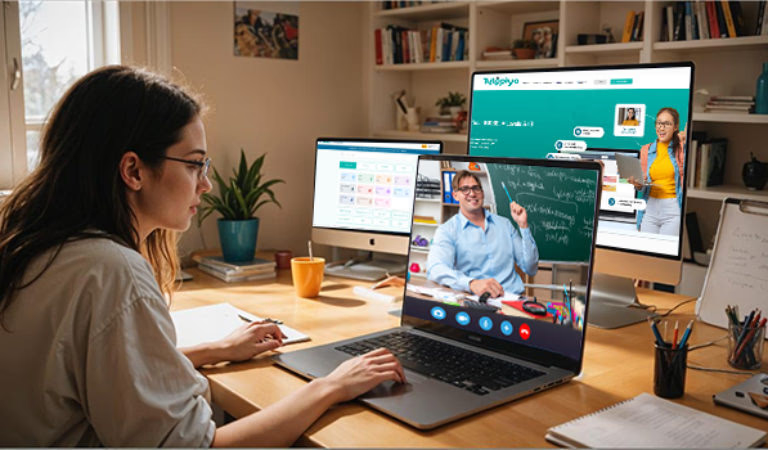
Tutopiya’s hybrid home tuition removes that friction for both part-time and full-time tutors. You start with a free online trial to meet a matched Singapore-based tutor, then lessons move in-person to your home. You pay by card on a monthly plan, credits are deducted only per completed lesson, and you get a full report of every class held, missed, rescheduled or cancelled. That accountability matters most with part-time tutors whose schedules are tighter - you always see exactly what happened.
How to decide
- Diagnose the goal. Foundations and routine favour part-time; exam technique and grade jumps favour full-time.
- Match to the level. Lower levels stretch a part-time tutor further; JC and exam-year subjects reward full-time experience.
- Weigh total spend. A cheaper tutor who takes longer can cost the same as a pricier one who moves faster - think results per dollar, not rate alone.
- Try before you commit. A free trial tells you more about fit and clarity than any profile or rate card.
The bottom line
There is no universal winner in part-time vs full-time tutor. A strong part-time tutor is often the smart, affordable choice for foundations and lower levels, while a full-time or ex-MOE tutor earns their premium in exam years and grade jumps. For the full picture across levels and options, see our complete guide to home tuition in Singapore.
Not sure which fits your child? Start with a free online trial and meet a matched Singapore-based tutor before you pay anything.
Frequently asked questions
What is the difference between a part-time and full-time home tutor? +
A part-time tutor is usually an undergraduate or working adult who teaches on the side, often at a lower rate. A full-time tutor tutors as their main profession, carries more experience across the MOE syllabus and marking schemes, and charges more. Ex-MOE teachers sit at the top of the full-time band.
Is a part-time tutor good enough for PSLE or O-Level? +
Often, yes. For building foundations, revising fundamentals and steady weekly practice at primary or lower-secondary level, a strong part-time tutor who scored well in the subject can be plenty - and easier on the budget. For exam years or grade jumps, a full-time or ex-MOE tutor usually adds more value.
Why do full-time tutors charge more? +
Full-time tutors have taught many students across the same level and subject, so they know common misconceptions, marking schemes and exam technique. That accumulated experience is what you pay for. It tends to matter most in exam years (P6, Sec 4/5, JC2) and when a child needs to move up a grade band quickly.
Are part-time tutors less reliable than full-time tutors? +
Not necessarily, but scheduling can be tighter. Part-time tutors juggle studies or a day job, so exam-period availability may shrink. A model that tracks completed lessons and gives you a full report keeps either type accountable, so reliability comes down to the individual more than the label.
How do I try a tutor before committing to a monthly plan? +
Start with a free online trial lesson to meet a matched Singapore-based tutor - part-time or full-time - and see them teach your child. If it's a good fit, you enrol in a monthly plan and lessons move in-person to your home. View home tutors and book a free trial here.
Written by
Tutopiya Singapore Education Desk
Singapore home tuition - PSLE, O-Level & A-Level (MOE syllabus)
The Tutopiya Singapore Education Desk covers home tuition, the MOE syllabus and exam preparation for Singapore families - from PSLE through the GCE O-Level and A-Level.
Related Articles
A-Level Project Work (PW) Home Tuition in Singapore
Project Work (PW) tuition in Singapore helps JC students structure research, the written report and the oral presentation - a tutor guides the work without doing it for them.

Assessment Books vs Home Tuition in Singapore
Assessment books vs tuition in Singapore - when the ten-year-series and self-study is enough, when a home tutor is worth it, and how to combine both effectively.

DSA Preparation with Home Tuition in Singapore
How Direct School Admission (DSA-Sec and DSA-JC) works in Singapore, what tuition can and cannot do, and how a home tutor supports the academic and portfolio side.