

How Schools Successfully Transition Students from National Curriculum to the British Curriculum: A Guide for K12 Leaders
How Schools Successfully Transition Students from National Curriculum to the British Curriculum
K12 school leaders face a critical challenge: successfully transitioning students from national curriculum to British curriculum programs. This transition affects students, parents, and teachers, requiring strategic planning, systematic support, and careful execution. Schools that manage this transition effectively protect student outcomes, maintain parent confidence, and strengthen their reputation as quality international education providers.
The growing demand for British curriculum programs (Cambridge IGCSE, Edexcel IGCSE, Cambridge A-Levels, Edexcel A-Levels) means more schools are navigating this transition. Success requires understanding the challenges, avoiding common mistakes, and implementing proven strategies that support students, teachers, and families through the change.
Introduction: A High-Stakes Transition

Growing Demand for British Curriculum
International schools worldwide are experiencing growing demand for British curriculum programs. Parents seek globally recognized qualifications, universities value British curriculum credentials, and students benefit from internationally transferable qualifications. This demand drives schools to transition from national curricula to British curriculum programs, creating opportunities and challenges for K12 leaders.
Transition Affects Students, Parents, and Teachers
Curriculum transition impacts multiple stakeholders. Students face learning style differences, assessment structure changes, and new expectations for independent learning. Parents navigate unfamiliar assessment systems, different academic expectations, and concerns about their children’s adaptation. Teachers must master new curriculum requirements, adapt teaching approaches, and support students through transition challenges. Successful transitions require addressing all stakeholder needs systematically.
The stakes are high. Poor transitions damage student confidence, erode parent trust, and undermine school reputation. Successful transitions strengthen school positioning, improve student outcomes, and create competitive advantages in international education markets.
Why the Transition Is So Challenging

Learning Style Differences
National curricula and British curriculum programs emphasize different learning approaches. National curricula often focus on memorization, teacher-directed instruction, and standardized content delivery. British curriculum programs emphasize critical thinking, independent analysis, and application of knowledge. Students accustomed to structured, teacher-led learning must adapt to more independent, inquiry-based approaches. This shift requires time, support, and systematic scaffolding.
Assessment Structure Shock
Assessment structures differ significantly between national curricula and British curriculum programs. National curricula often rely on high-stakes examinations with predictable formats, while British curriculum programs emphasize continuous assessment, coursework, and varied examination styles. Students face mark scheme differences, assessment criteria variations, and unfamiliar examination formats. This assessment structure shock creates anxiety, performance gaps, and adaptation challenges that schools must address proactively.
Independent Learning Expectations
British curriculum programs expect students to demonstrate independent learning skills, self-directed research, and autonomous study habits. Students transitioning from national curricula may lack these skills, having relied on teacher guidance and structured learning environments. Building independent learning capacity requires gradual scaffolding, explicit skill development, and ongoing support systems that help students develop autonomy while maintaining academic performance.
These challenges compound when schools underestimate transition complexity, creating student frustration, parent concern, and teacher stress that undermine successful curriculum adoption.
Common Mistakes Schools Make
Assuming Syllabus Change Is Enough
Many schools assume that changing syllabi and textbooks is sufficient for successful transition. This approach overlooks learning style differences, assessment literacy gaps, and independent learning skill requirements. Syllabus change alone doesn’t address how students learn, how assessments work, or how expectations differ. Schools that focus only on content change miss critical transition elements, leading to student struggles and poor outcomes.
Ignoring Student Readiness
Schools sometimes ignore student readiness for British curriculum demands. Students may lack critical thinking skills, independent learning habits, or assessment literacy required for success. Without readiness assessment and targeted support, students face overwhelming challenges that damage confidence and performance. Schools must evaluate student readiness, identify skill gaps, and provide systematic support that builds capacity gradually.
Underestimating Assessment Literacy
Assessment literacy gaps create significant transition challenges. Students and teachers may not understand mark schemes, assessment criteria, or examination expectations. This gap leads to poor performance despite content knowledge, frustration with assessment outcomes, and confusion about academic expectations. Schools must prioritize assessment literacy development, providing clear guidance, practice opportunities, and systematic feedback that builds understanding.
These mistakes create transition failures that damage student outcomes, erode parent confidence, and undermine school reputation. Successful transitions require comprehensive approaches that address learning styles, assessment structures, and independent learning expectations systematically.
What Successful Transitions Look Like

Orientation Beyond Textbooks
Successful transitions provide orientation that goes beyond textbook distribution. Students need understanding of learning expectations, assessment structures, and academic standards. Orientation programs introduce critical thinking approaches, independent learning skills, and British curriculum assessment methods. This comprehensive orientation builds student confidence, clarifies expectations, and establishes foundation for successful transition.
Assessment Familiarisation
Assessment familiarisation is critical for successful transitions. Students need exposure to mark schemes, assessment criteria, and examination formats before high-stakes assessments. Practice opportunities with feedback help students understand expectations, develop assessment skills, and build confidence. Schools that provide systematic assessment familiarisation reduce student anxiety, improve performance, and create smoother transitions.
Gradual Independence Building
Successful transitions build independent learning skills gradually. Students receive scaffolding that supports autonomy development while maintaining academic performance. Support systems provide structure initially, then gradually reduce as students develop independent learning capacity. This gradual approach prevents overwhelming students while building skills required for British curriculum success.
The result: students adapt successfully, teachers feel supported, and schools achieve smooth transitions that protect outcomes and reputation.
Supporting Teachers Through the Shift

Curriculum Interpretation Support
Teachers need support interpreting British curriculum requirements, understanding learning objectives, and aligning teaching approaches. Curriculum interpretation support provides clarity on syllabus expectations, assessment alignment, and pedagogical approaches. This support helps teachers deliver curriculum effectively, assess students accurately, and support transition successfully.
Assessment Alignment Tools
Teachers require tools that align teaching with assessment expectations. Assessment alignment tools help teachers understand mark schemes, apply assessment criteria consistently, and prepare students for examinations. These tools reduce teacher stress, improve assessment accuracy, and ensure students receive appropriate preparation for British curriculum assessments.
Confidence-Building Systems
Teachers need systems that build confidence during transition. Professional development, resource libraries, and collaborative support create confidence-building environments. Teachers feel supported rather than isolated, equipped rather than overwhelmed, and confident rather than uncertain. These systems enable teachers to support students effectively through transition challenges.
When teachers feel supported, students receive better guidance, transitions proceed more smoothly, and schools achieve successful curriculum adoption.
The Role of Diagnostic & Reinforcement Systems
Early Gap Identification
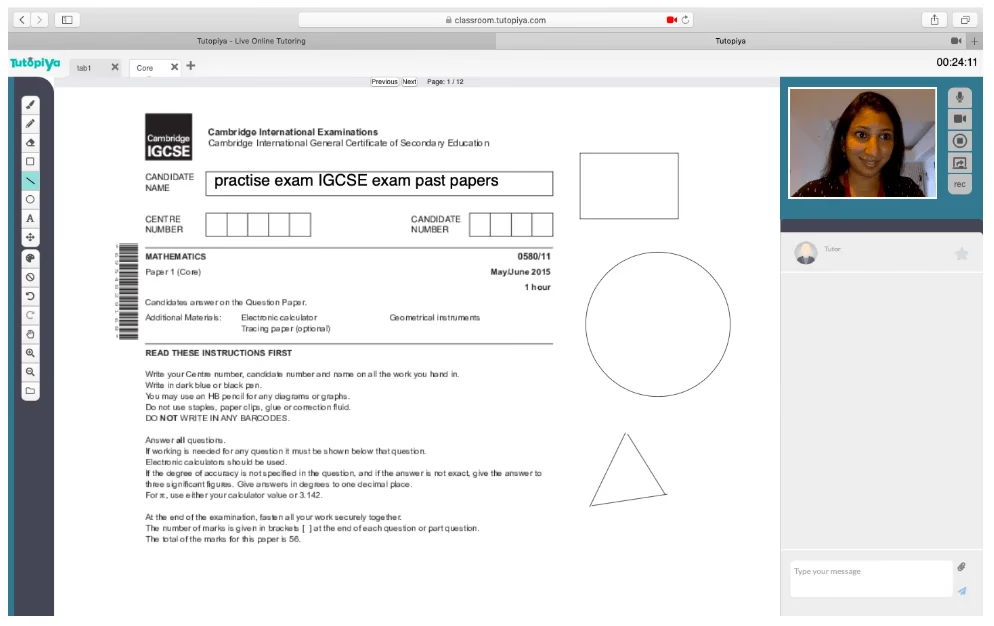
Diagnostic systems identify learning gaps early in transition process. These systems assess student readiness, identify skill deficiencies, and highlight areas requiring support. Early gap identification enables targeted intervention, prevents problems from escalating, and ensures students receive appropriate support before challenges become overwhelming.
Continuous Reinforcement
Reinforcement systems provide ongoing practice and feedback that builds student capacity. These systems offer practice opportunities aligned with British curriculum expectations, immediate feedback on performance, and targeted reinforcement of key skills. Continuous reinforcement builds student confidence, improves performance, and supports successful transition adaptation.
Reducing Student Anxiety
Diagnostic and reinforcement systems reduce student anxiety by providing clarity, practice opportunities, and feedback. Students understand expectations, receive support for skill development, and gain confidence through systematic reinforcement. Reduced anxiety improves performance, enhances engagement, and supports successful transition outcomes.
Schools that implement diagnostic and reinforcement systems create supportive transition environments that identify needs early, provide continuous support, and reduce student anxiety throughout the transition process.
Strategic Advice for School Leaders

Transition Is a Process, Not an Event
Successful curriculum transitions are processes that unfold over time, not single events. Schools must plan for gradual implementation, ongoing support, and continuous adjustment. Rushing transitions creates problems, while systematic processes enable successful adaptation. Leaders who treat transition as a process create conditions for success that protect student outcomes and school reputation.
Systems Matter More Than Speed
Effective systems matter more than transition speed. Schools need diagnostic systems, reinforcement mechanisms, assessment alignment tools, and support frameworks that enable successful transition. Rushing implementation without proper systems creates problems, while well-designed systems ensure smooth transitions regardless of timeline. Leaders who prioritize systems over speed achieve better outcomes.
Long-Term Success Protects Results and Reputation
Long-term success requires systematic approaches that support students, teachers, and families throughout transition. Schools that invest in comprehensive transition support protect student results, maintain parent confidence, and strengthen school reputation. Short-term shortcuts create long-term problems, while systematic approaches build sustainable success.
The strategic approach: treat transition as a process, prioritize systems over speed, and focus on long-term success that protects results and reputation.
How AI Buddy Facilitates Successful Curriculum Transition
AI Buddy provides comprehensive solutions that facilitate successful transitions from national curriculum to British curriculum programs, addressing every challenge schools face during this critical process. The platform offers a systematic, multi-layered approach that supports students, teachers, and school leaders throughout the entire transition journey.
Comprehensive Orientation and Assessment Familiarisation
AI Buddy delivers systematic orientation that goes far beyond textbook distribution. The platform introduces students to British curriculum learning expectations through interactive modules that explain critical thinking requirements, independent learning expectations, and academic standards. Students receive detailed guidance on how British curriculum assessments differ from national curriculum examinations, including mark scheme structures, assessment criteria application, and examination format variations.
Through AI Buddy’s assessment familiarisation tools, students gain hands-on exposure to mark schemes with detailed explanations of how examiners evaluate responses. The platform provides practice opportunities with real examination questions from Cambridge IGCSE, Edexcel IGCSE, Cambridge A-Levels, and Edexcel A-Levels programs. Students receive immediate, detailed feedback on their responses, showing exactly how their answers align with mark scheme expectations. This comprehensive approach builds student confidence by clarifying expectations, reducing assessment anxiety, and establishing a solid foundation for successful transition.
Gradual Independence Building Through Scaffolded Learning
AI Buddy supports gradual independence building through sophisticated scaffolded learning systems. The platform begins with structured learning experiences that provide clear guidance, step-by-step instructions, and comprehensive support. As students develop confidence and capability, AI Buddy gradually reduces scaffolding, encouraging students to work more independently while maintaining support systems that prevent overwhelming challenges.
The platform offers practice opportunities specifically aligned with British curriculum expectations, including critical thinking exercises, independent research tasks, and analytical writing assignments. Students receive immediate feedback on their performance, highlighting strengths and areas for improvement. Targeted reinforcement focuses on developing critical thinking skills, independent learning habits, and autonomous study approaches. This gradual approach prevents students from feeling overwhelmed while systematically building the skills required for British curriculum success.
AI Buddy’s adaptive learning system recognizes individual student progress, adjusting scaffolding levels based on demonstrated capability. Students who adapt quickly receive increased independence opportunities, while those needing more support continue receiving structured guidance until they’re ready for greater autonomy. This personalized approach ensures every student develops independent learning capacity at their own pace.
Comprehensive Teacher Support and Curriculum Alignment
AI Buddy provides extensive curriculum interpretation support that helps teachers understand British curriculum requirements comprehensively. The platform offers detailed syllabus breakdowns, learning objective explanations, and pedagogical approach guidance specific to British curriculum programs. Teachers receive clear explanations of how British curriculum teaching differs from national curriculum approaches, including emphasis on critical thinking, independent learning facilitation, and assessment-aligned instruction.
Assessment alignment tools ensure teachers understand mark schemes thoroughly, providing detailed mark scheme explanations, sample responses at different achievement levels, and guidance on applying assessment criteria consistently. The platform helps teachers prepare students effectively for examinations by aligning teaching content with assessment expectations, ensuring students understand how their learning connects to examination requirements.
Confidence-building systems through comprehensive resource libraries provide teachers with ready-made lesson plans, assessment materials, and teaching resources aligned with British curriculum requirements. Automated support systems answer curriculum questions, provide teaching guidance, and offer pedagogical suggestions. Collaborative frameworks enable teachers to share best practices, discuss challenges, and learn from each other’s experiences. These systems enable teachers to support students successfully through transition challenges while building their own confidence in British curriculum delivery.
Early Gap Identification and Continuous Reinforcement
AI Buddy’s sophisticated diagnostic systems identify learning gaps early in the transition process through comprehensive readiness assessments. The platform evaluates student readiness across multiple dimensions: content knowledge from national curriculum, critical thinking skills, independent learning capacity, assessment literacy, and British curriculum-specific knowledge. These assessments identify skill deficiencies precisely, highlighting specific areas requiring targeted support.
The diagnostic system provides detailed reports showing exactly where each student stands relative to British curriculum expectations. School leaders receive comprehensive analytics showing class-level readiness, common skill gaps, and transition support priorities. This early identification enables schools to provide targeted intervention before challenges become overwhelming, preventing student frustration and performance decline.
Continuous reinforcement systems provide ongoing practice and feedback that builds student capacity systematically. The platform offers practice questions aligned with British curriculum expectations, immediate feedback on responses, and targeted reinforcement exercises for areas requiring improvement. This continuous reinforcement reduces student anxiety by providing clarity, building confidence through practice, and supporting successful adaptation throughout the transition process.
AI Buddy’s reinforcement system adapts to individual student needs, providing more practice in areas where students struggle and advancing quickly through areas where students demonstrate mastery. This personalized approach ensures efficient use of student time while maximizing learning outcomes.
Systematic Transition Management and Process Support
AI Buddy treats transition as a comprehensive process, providing systems that support gradual implementation, ongoing support, and continuous adjustment. The platform offers transition planning tools that help schools develop systematic implementation timelines, identify support requirements, and plan resource allocation. School leaders receive guidance on transition phases, from initial preparation through full implementation and ongoing refinement.
The platform prioritizes effective systems over transition speed, ensuring smooth transitions that protect student outcomes and school reputation. AI Buddy’s transition management tools help schools avoid common mistakes like rushing implementation, underestimating support needs, or overlooking stakeholder concerns. The platform provides frameworks for managing parent communication, student support, teacher development, and assessment alignment throughout the transition process.
Long-term success is built through comprehensive support that addresses learning style differences, assessment structure changes, and independent learning expectations systematically. AI Buddy provides ongoing support beyond initial transition, helping schools refine approaches, address emerging challenges, and optimize transition outcomes. The platform’s analytics systems track transition progress, identify areas requiring attention, and provide data-driven insights for continuous improvement.
Implementation Process and School Support
AI Buddy’s implementation process begins with comprehensive consultation to understand each school’s specific transition context, challenges, and goals. The platform’s team works with school leaders to assess current curriculum, evaluate student readiness, identify teacher support needs, and develop customized transition plans. This consultation ensures AI Buddy solutions align precisely with each school’s unique requirements.
During implementation, AI Buddy provides extensive training for teachers, helping them understand platform features, utilize curriculum resources effectively, and leverage assessment tools for student support. The platform offers ongoing professional development opportunities, ensuring teachers feel confident and capable in using AI Buddy to support curriculum transition.
Student onboarding processes introduce students to AI Buddy’s features, explain how the platform supports their transition, and provide initial orientation to British curriculum expectations. The platform’s user-friendly interface ensures students can navigate resources independently, while support systems provide guidance when needed.
Real-World Outcomes and Measurable Results
Schools using AI Buddy report significantly smoother transitions with measurable improvements in student outcomes. Students demonstrate faster adaptation to British curriculum expectations, improved assessment performance, and increased confidence in independent learning. Teachers report higher confidence in British curriculum delivery, better understanding of assessment requirements, and increased effectiveness in supporting student transition.
Parent satisfaction increases as they see their children adapting successfully, understanding assessment expectations, and performing well in British curriculum programs. School leaders report stronger reputation positioning, improved student retention, and competitive advantages in international education markets.
The AI Buddy Advantage: An Integrated Solution
AI Buddy is the ideal solution for schools transitioning from national curriculum to British curriculum programs because it addresses every transition challenge comprehensively in one integrated platform. Rather than requiring schools to piece together multiple solutions, AI Buddy provides orientation, assessment familiarisation, gradual independence building, teacher support, diagnostic systems, and continuous reinforcement in a unified system that works seamlessly together.
The platform’s integrated approach ensures all transition elements align, from student orientation through ongoing support. Data flows between systems, providing comprehensive insights into transition progress, student needs, and support effectiveness. This integration creates efficiency, reduces complexity, and ensures consistent support quality throughout the transition process.
The Result: Schools using AI Buddy successfully transition students from national curriculum to British curriculum programs, protecting student outcomes, maintaining parent confidence, and strengthening school reputation. The platform’s comprehensive, systematic approach addresses every aspect of curriculum transition, from initial planning through long-term success, ensuring smooth transitions that position schools as leaders in international education.
Explore How AI Buddy Facilitates Successful Curriculum Transition
For K12 school leaders navigating the transition from national curriculum to British curriculum programs, AI Buddy provides comprehensive solutions that address learning style differences, assessment structure changes, and independent learning expectations. Through systematic orientation, assessment familiarisation, gradual independence building, teacher support, diagnostic systems, and continuous reinforcement, AI Buddy facilitates successful transitions that protect student outcomes and school reputation.
For more insights on curriculum transition strategies and British curriculum adoption, visit www.tutopiya.com or contact us at +65 8749 3930.
Ready to Excel in Your Studies?
Get personalised help from Tutopiya's expert tutors. Whether it's IGCSE, IB, A-Levels, or any other curriculum — we match you with the perfect tutor and your first session is free.
Book Your Free TrialWritten by
Tutopiya Team
Educational Leadership Expert
Related Articles

A-Level Chemistry Past Papers: Cambridge (9701) & Edexcel – Complete Guide
Master A-Level Chemistry with past papers from Cambridge 9701 and Edexcel. Includes paper structure breakdowns, topic analysis, exam strategies, and revision tips for top grades.

A-Level vs IB: Which Is Better? An Honest Comparison for 2026
A-Level vs IB — which programme is right for you? Compare structure, difficulty, assessment, university recognition, and career paths in this honest, detailed guide.

IGCSE Biology Key Definitions – Complete Definition Sheet (2026)
Download our comprehensive IGCSE Biology key definitions sheet covering all essential terms from cells and enzymes to ecology and genetics. Perfect for exam revision.